Isolated Serial Interface
The purpose of this interface is to isolate a USB-serial converter from another device. It can be used with microcontrollers (Arduino) or any device that requires electrical isolation.
The circuit is based on the H11L1 Schmitt trigger optocoupler, which has a high data rate and is easily found in electronic component stores. I ruled out other optocoupler models precisely because of the transfer rate, since the goal was to reach 115200 bps.
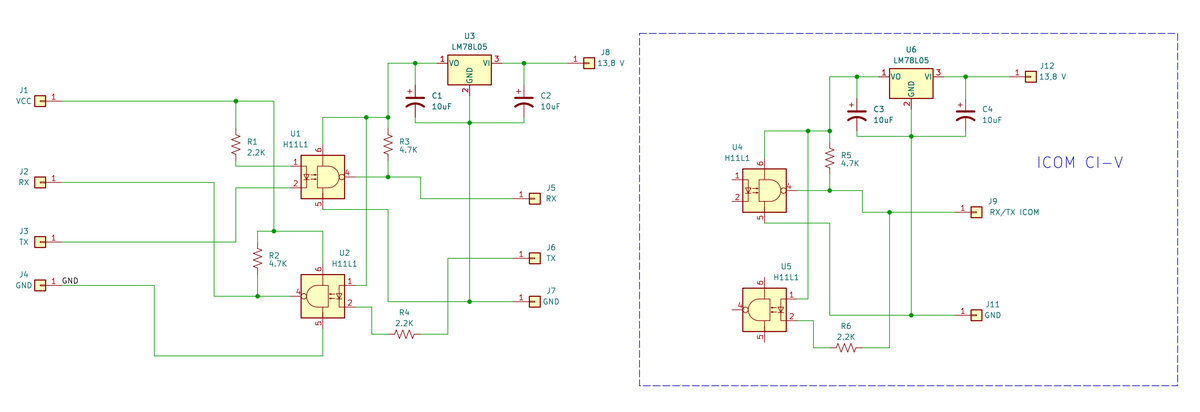
The circuit shown includes a version with independent RX and TX outputs and a version with RX-TX tied together (CAT interface for ICOM radios that use CI-V). The circuit on the left side connects to any USB-serial converter model (FT232, CP2102, CH340 etc.).
For validation, I sent data by connecting a USB-serial converter to the interface output at 115200 bps, using a Python script to write to one port and verify that the data arrived correctly by reading and comparing the result.
Assembly
For the build I used a universal printed circuit board and a USB-serial converter based on the CH340 IC with a USB-C port.
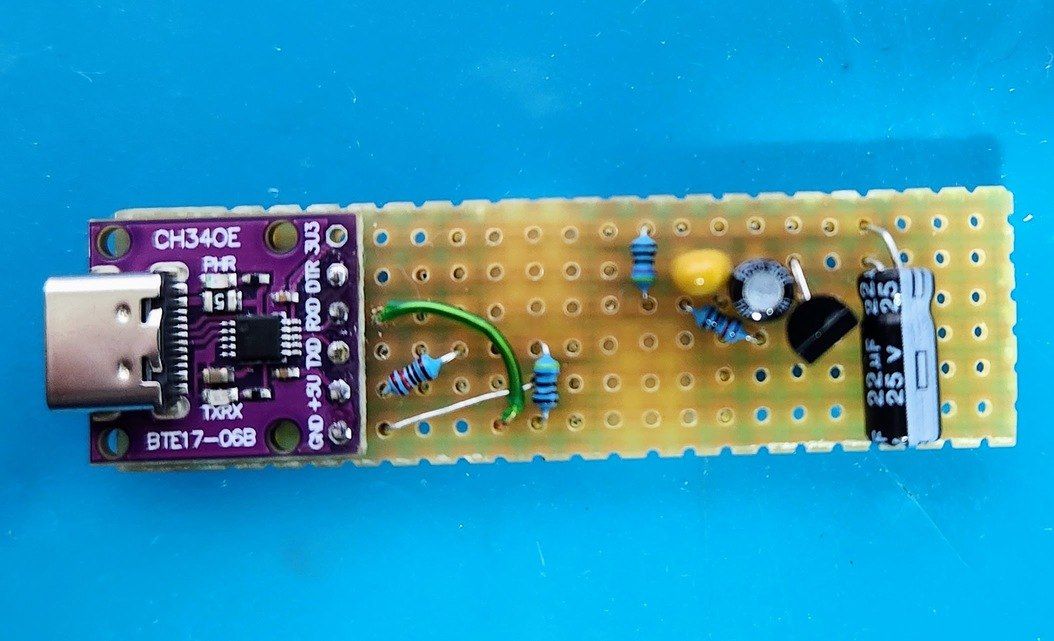
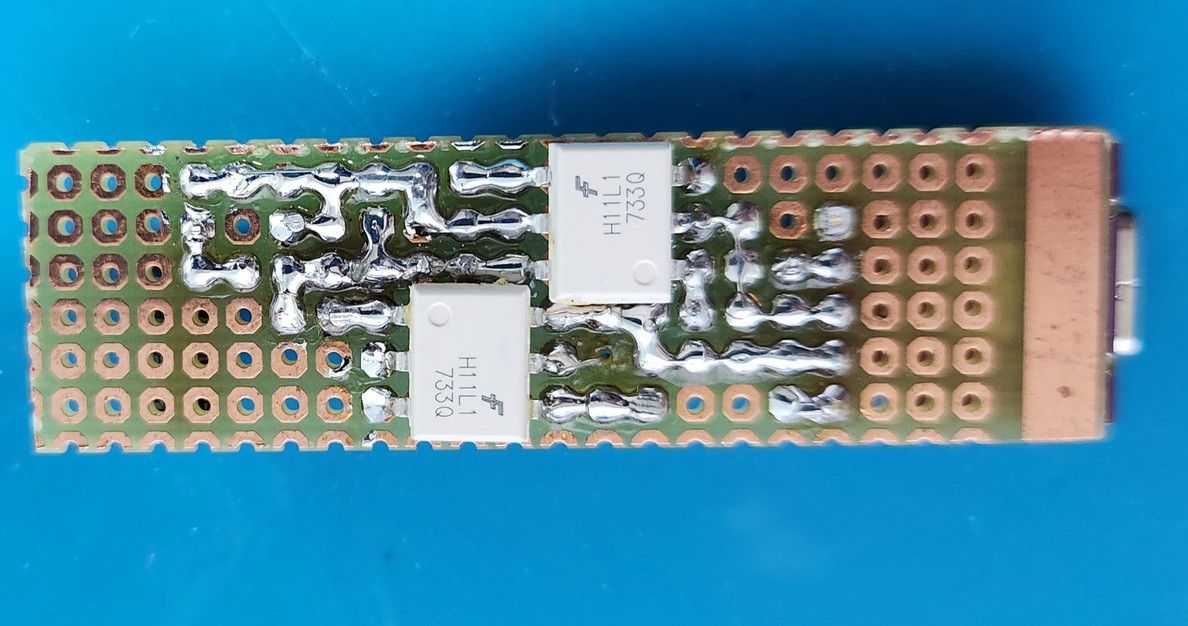
The 13.8 V supply comes from the radio's own ACC interface or directly from the power supply.
References
USB Interface for Transceivers. USB: QST Magazine, Apr. 2023.